Coming Home: 7 Somatic Practices for the Recovering People Pleaser


Your people-pleasing isn't a flaw. It's a survival strategy you've mastered.
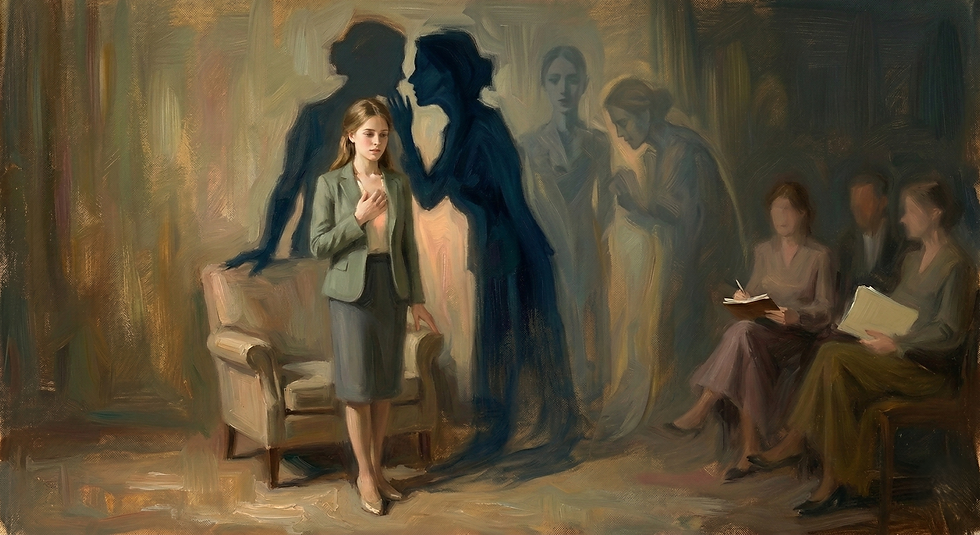
You learned to track moods, anticipate needs, and scan every room for danger before you learned most other things. That hollow feeling in your chest? That's not emptiness. That's you—living outside your own body.
Awareness is the beginning. But awareness alone doesn't bring you home. It just shows you how far you've wandered.
The return requires practice. Not perfection. Not performance. Just small, daily, imperfect choices to come back to your body, back to your edges, back to yourself.
If you've spent your life saying yes when you meant no, shrinking to make others comfortable, or feeling hollow after giving too much—these seven practices are for you.
A note before we begin:
If you are currently in an abusive relationship, your priority is physical safety—not self-work. Some of these practices involve setting boundaries and staying with discomfort. In a healthy context, these are healing. In an abusive context, they can escalate danger.
Please trust your instincts about what is safe for you right now. If you need support, the National Domestic Violence Hotline is available 24/7 at 800-799-7233 or by texting START to 88788.
If you're unsure whether this applies to you, err on the side of caution. These practices will still be here when you're safe.
Practice 1: Reclaim Your Tracking (Somatic Awareness for People Pleasers)
You already have a superpower. You just didn't know it.
As a people-pleaser, your survival has depended on one thing above all else: tracking. You learned to scan the environment for the slightest shift in someone's mood. You read micro-expressions, you sensed the tension in a room before anyone spoke, you catalogued what kept you safe and what signaled danger. This wasn't a flaw. This was data collection. This was you, doing exactly what you needed to do to survive.
Now, we're going to let that same skill bring you home.
The Practice: Turn Your Tracker Inward
For years, your tracking has been aimed outward—at parents, partners, bosses, anyone who held your safety in their hands. The first practice is simply to turn that same exquisite attention toward yourself.
Morning or evening, when you have a quiet moment, pause. You don't need to close your eyes if that doesn't feel safe. You don't need to be in a special place. Just pause.
Then, do what you've always done, but with a new target. Scan. Track. Notice:
Where is there tension in your body?
Where is there ease?
What's the temperature of your hands, your feet?
What's the energy level in your chest, your stomach?
What do you feel?
You're not trying to change anything. You're not trying to relax, or breathe deeply, or "be present" in some idealized way. You are simply doing what you've always done—tracking—but now you're gathering data on the one person you were never allowed to study: yourself.
This is your baseline. This is the feel of "home" in your unique body.
If you feel nothing or feel more disconnected, that's not failure. That's information. Some trackers learned that noticing their own body was dangerous—it hurt too much, or it was punished. If that's you, start even smaller. Track the weight of your hand on a table. Track the feeling of your back against a chair. Start at the surface. Your body remembers you; it will let you in when it's ready.
Over time, this practice does something remarkable. Because you are a brilliant tracker, you will begin to recognize the earliest, subtlest signals of when you start to leave yourself. And for a tracker, recognition is everything. It's the moment you shift from being a victim of the data to being the one who interprets it.
Practice 2: Reclaim Your Escape
You have another superpower. One you probably hate. One you might call dissociation, spacing out, numbing out, or leaving.
When the tracking we talked about in Practice 1 detected danger—a shift in mood, a rising voice, a room that didn't feel safe—your body did exactly what it was designed to do. It got you out. Not physically, maybe, but psychically. You learned to leave your body because staying inside it was unbearable. The hollow feeling? That was an exit strategy. The sudden fog? An escape hatch. The way your thoughts would get consumed with what someone else was thinking or feeling? That was you, finding safety in their experience because your own was too dangerous.
This wasn't a failure. This was brilliance. This was your spirit protecting itself the only way it could.
Now, we're going to let that same skill—that exquisite ability to detect when you've left—become your homecoming signal.
The Practice: Let Leaving Become Returning
With Practice 1, you're building a baseline. You're starting to know what "home" in your body actually feels like. Now, you get to use your most finely-honed survival skill: noticing the moment you leave.
Maybe it's a hollow feeling in your chest. Maybe it's the way your thoughts suddenly become consumed with what someone else is thinking. Maybe it's a sense of unreality, like you're watching yourself from a distance. Maybe your shoulders creep toward your ears. Maybe your breath becomes shallow.
These aren't failures. They're signals. And you, the brilliant tracker, are exquisitely sensitive to them. You've always been. The only difference now is what you do with the information.
When you notice you've left, here's the practice: Name it. Just to yourself. Not with shame. Not with "I'm doing it again." Just a simple, neutral observation.
"Oh, I'm leaving."
"There's the hollow feeling."
"I'm in their head right now, not mine."
That's it. That's the whole practice for now. You don't have to come back. You don't have to fix it. You just have to notice, with the same precision you've always used to notice everything else.
If you notice you've left and feel immediate shame, that's not a problem. That's just another layer of the pattern. The shame is also information. Can you notice it without leaving that? Can you say, "Oh, and now there's shame about leaving"?
The noticing itself is the practice. No judgment. Just awareness. You're not trying to stay in your body 24/7. You're just building a relationship with the moment you leave. Because for someone who learned to escape as a survival strategy, that moment of awareness is everything. It's the pause between the trigger and the automatic response. And in that pause, someday, you'll have a choice.
Practice 3: Reclaim Your Return
You know how to leave. You're brilliant at it. You've spent years perfecting the escape.
But here's what you may not yet know: you also know how to come back. You've just never been given permission.
Every time you've surfaced from a daze, blinked and realized an hour passed, or suddenly noticed your body again after a difficult conversation—that was you, returning. Every time. The body doesn't forget how to come home. It just needs you to stop treating the return as a failure.
The Practice: Come Back Gently
When you notice you've left—when Practice 2 gives you that signal—the next step is simple. Not always easy. But simple.
You come back. Not with force. Not with self-criticism. Not with "I should have stayed present." Just gently. The way you'd guide a child back to safety. The way you'd reach for a friend who's drifted.
Here's the secret: you already have everything you need to return. Your body has been waiting for you. It remembers you. And it responds to the smallest gestures.
Try any of these. Not all of them. Just one. Just for a breath.
Place a hand on your chest. Feel the warmth of your own palm. That's you, touching you.
Feel your feet on the floor. Press into them slightly. That's you, grounded.
Take one conscious breath. Just one. Follow it all the way in, all the way out.
Name five things you can see. Four you can touch. Three you can hear. Two you can smell. One you can taste. This is your tracker at work, gathering data from the present instead of scanning for danger.
Stretch your fingers. Roll your shoulders. Move your body slightly, just to remind yourself you're in it.
If even these small gestures feel impossible, start smaller. Just notice one surface touching another—your back against the chair, your feet in your shoes. That's enough. That's a return.
The return doesn't have to be dramatic. It doesn't have to be permanent. Five seconds of presence counts. Five seconds of choosing to be in your body, after years of choosing to leave, is revolutionary.
If your body resists—if coming back feels dangerous—that's not failure. That's history. Some bodies learned that presence equals pain. If that's you, the practice is simply: notice the resistance. "Oh, my body doesn't feel safe here." That noticing is itself a kind of presence. You're here enough to know you don't want to be. That's something.
Over time, the returns get easier. The body learns: she's not leaving me anymore. She's coming back. She's choosing me.
This is the practice that changes everything. Not because you'll stay present forever—you won't. But because each return is a tiny rebellion against the years you spent away. Each return is a love letter to the body you once had to abandon.
And the body? It reads every single one.
Practice 4: Reclaim Your Edges
You know where other people end.
You've always known. This is part of your tracking. You can sense when someone is uncomfortable, when you've overstepped, when a boundary has been crossed—their boundary. You've spent your whole life honoring the invisible lines around everyone else, adjusting yourself to avoid bumping into them.
But here's what happened: in learning to navigate everyone else's edges so carefully, you lost track of your own. You blurred. You blended. You became so expert at fitting yourself into the contours of other people that you forgot you had contours of your own.
This wasn't a flaw. This was survival. When you're dependent on others for safety, love, or approval, knowing exactly where they begin and end is essential. Their edges are the map you followed to stay safe.
Now, we're going to let that same map-reading skill show you something new.
The Practice: Find Where You Begin
Boundaries aren't walls you build. They're not something you create from nothing. They're already there—the shape of you, the container that holds your beautiful self. You just can't feel them yet because you've been pressed against everyone else for so long.
The practice is simple, though not easy: start noticing where someone else ends, and you begin.
Not in big, dramatic confrontations. Not in conversations with the people who scare you most. Start small. Start in low-stakes moments, with low-stakes people.
At a coffee shop when someone asks to share your table.
On the phone with a telemarketer.
With a friend who asks for a small favor.
In a group chat that's blowing up your phone.
Pause. Just for a breath. And ask yourself one question:
"What do I want here?"
Not what would be nice. Not what would keep the peace. Not what would make me look good. What do I actually want?
Maybe you want to say yes. Maybe you genuinely have the energy. That's fine. That's also a boundary—a conscious yes is just as important as a no.
But maybe you want to say:
"I need to think about that before I answer."
"I can't do that today."
"I'm not available then."
"That doesn't work for me."
"Actually, I'd rather not."
If you are in a relationship where setting a small boundary feels terrifying—not just uncomfortable, but genuinely unsafe—please hear this: your fear is valid. In healthy relationships, boundaries create connection. In abusive ones, they can trigger escalation.
*If this is your situation, the practice isn't to set the boundary. The practice is to notice that you want one, and to seek support from someone who can help you assess your safety. The National Domestic Violence Hotline (800-799-7233) can help you create a safety plan before you attempt any boundary-setting.*
Notice what happens in your body when you even imagine saying these things. That flutter in your chest? That tightness in your throat? That's not danger. That's your edges, waking up. That's the shape of you, pressing gently against the world for the first time in years.
If saying these things feels impossible right now, that's not failure. That's information. Your nervous system learned that having edges was dangerous. Maybe having a preference meant disappointing someone. Maybe saying no meant withdrawal of love. If that's you, the practice isn't saying the words out loud. It's just letting yourself think them. Just letting yourself feel what it would be like to have a preference, even if you never act on it.
And when you do start saying them—when you whisper a no or mumble a boundary—notice what happens next. Notice who respects your edges and who pushes against them.
The pushing will tell you everything. Not about whether your boundary is wrong—but about who has benefited from you having none. The people who truly belong in your life will adjust. They may need time, they may have feelings, but they will adjust. The people who need you small and without edges? Their discomfort with your growth is not your problem. It's just more data.
Your edges aren't rejection. They're not selfishness. They're definition. They're how others know how to love you well. A person without edges can't be loved because there's no one there to love. You just blend into whoever needs you.
But a person with edges? A person who knows where they begin and end? That person can be met. That person can be chosen. That person can be truly, deeply loved—not for what they provide, but for who they are.
And you get to be that person now.
Practice 5: Reclaim Your Limits
You have been taught that limits are failures.
That needing rest means you're weak.
That having a threshold means you're not enough.
That saying "I can't" is admitting defeat.
You've watched others honor their limits while ignoring your own, pushing past exhaustion, past resentment, past the quiet voice that said stop—because stopping felt dangerous. Because stopping might mean disappointing someone. Because stopping might mean you weren't the person they needed you to be.
But here's what you may not yet know: you have always had limits. They've been speaking to you your whole life. You just weren't allowed to listen.
The tension in your shoulders? That was a limit, speaking.
The hollow feeling after saying yes? That was a limit, speaking.
The irritability that seems to come from nowhere? That was a limit, speaking.
The resentment that builds toward people you love? That was a limit, screaming.
These aren't weaknesses. They're not flaws. They're your body's way of telling you: you have crossed your own edge. You are living outside yourself again. Come back.
The Practice: Consult Your Limits Before You Cross Them
You're used to noticing limits after the fact. After you're exhausted. After you've said yes and immediately regretted it. After the resentment has already taken root.
The practice now is to move that noticing earlier. To consult your limits before you commit, before you say yes, before you offer something you don't have.
When something is asked of you—anything, from a small favor to a major commitment—pause. Just a breath. Just a moment. And check in with yourself.
Ask, quietly, honestly:
"Do I have the energy for this?" Not the energy I wish I had. Not the energy I should have. The energy I actually have, right now, in this body.
"Am I agreeing from genuine desire, or from obligation?" Does this yes want to come out of me? Or is it being pulled out by fear, guilt, or expectation?
"What will this cost me?" Not just time. Energy. Peace. Sleep. Presence with myself. Presence with people who matter.
"What do I need right now?" Before I answer their need, what does my own need look like?
You don't have to answer these questions out loud. You don't have to act on them immediately. You just have to ask them. You just have to let your limits have a voice in the conversation for once.
If you ask these questions and hear nothing—if you genuinely don't know what you need or want—that's not failure. That's information. Your limits have been silenced for so long they've forgotten how to speak. The practice, then, is just creating space for them to be heard someday. Keep asking. Keep pausing. Eventually, a whisper will come.
And when you do hear your limits—when you feel the "no" rising in your chest or the fatigue settling in your bones—notice what happens next. Notice the stories that come up. I'm being selfish. They'll be disappointed. I should be able to do this. What will they think?
These stories aren't truth. They're the old protection system, trying to keep you safe by keeping you small. You can thank them for trying. And then you can listen to your limits anyway.
Your limits aren't failures. They're not rejections. They're the shape of you—the container that holds your beautiful self.
A container without limits can't hold anything. It just spills everywhere. Your love spills where it wasn't meant to go. Your energy drains into places that don't nourish you. Your presence scatters instead of landing where it matters.
But a container with limits? A container that knows how much it can hold? That container can be full. That container can receive. That container can offer its contents deliberately, generously, without resentment—because it knows it will have enough left for itself.
You get to be that container now.
Practice 6: Reclaim Your Present
You have spent your whole life time-traveling.
Not literally, of course. But mentally? Emotionally? You've lived everywhere but here. You've lived in the past, replaying conversations, analyzing what you should have said differently, scanning for what you missed. You've lived in the future, anticipating what might go wrong, preparing for every possible outcome, trying to control what hasn't even happened yet.
This wasn't a flaw. This was survival. Your mind learned that if it could just analyze the past enough, it could prevent future pain. If it could just anticipate every possibility, it could keep you safe. You became a master of time travel because the present—the actual, unfolding present—felt too dangerous to occupy.
But here's what you may not yet know: the present is the only place where choice exists.
The past offers information. The future offers anxiety. But the present? The present offers something the other two never can: the chance to do it differently.
The Practice: Ground in the Moment of Choice
The old patterns don't announce themselves. They don't say "I'm about to run the show." They just rise—the pull to shrink, the urge to please, the automatic "yes" that comes before you've even checked in with yourself.
And in that moment, you have something you've never had before: awareness. You've been practicing. You know when you're leaving. You know how to return. You know where your edges are. You know what your limits feel like.
Now, you get to use all of that in real time.
When you feel the pull—the old familiar tug toward shrinking, pleasing, disappearing—pause. Just a breath. Just a moment. And ground yourself in something real:
Feet on the floor. Feel them. Press into the ground beneath you. This floor, this moment, this body.
Breath in the body. Just one. Feel it move through you. You are alive. You are here.
One question: "What do I need right now?"
Not what does she need. Not what would keep the peace. Not what would make everyone comfortable. Not what the old pattern says you should do.
What do you need?
Maybe the answer is "I need to say no." Maybe it's "I need a moment to think." Maybe it's "I need to speak even though my voice is shaking." Maybe it's "I need to let them be disappointed and stay here anyway."
Whatever it is, that answer is yours. And in this moment, you get to choose it.
If you can't find the answer—if the old pattern still runs the show—that's not failure. That's practice. You didn't learn this pattern overnight. You won't unlearn it overnight. The fact that you noticed the pull, even if you couldn't choose differently? That's everything. That's the crack in the pattern. Next time, the crack gets bigger.
If choosing differently feels terrifying, that's not weakness. That's your nervous system learning. It's been running the same program for years, maybe decades. When you choose differently, it sounds alarms: Danger! This is new! We don't know what happens next! You can thank it for trying to protect you. And then you can choose differently anyway.
Each time you choose differently—speak up, pause, say no, let someone be disappointed, take credit, take up space, ask for what you need—you're rewiring the pattern. You're telling your nervous system: This is different now. We're safe. We can try something new.
Not all at once. Not perfectly. Just one moment at a time.
The present moment is where your body, mind, and spirit meet. It's the only place any of them actually exist. And you get to show up here as yourself—not as who you think others want you to be, not as who the past trained you to become, but as who you actually are, right now, in this breath, in this body, in this life.
That's not selfishness. That's reality.
And you get to live in it now.
Practice 7: Reclaim Your Staying
You know how to flee. You've perfected it.
When discomfort rises, you leave. When someone is angry, you shrink. When conflict brews, you disappear. When you've said something that might displease, you scramble to fix it. When the inner critic starts its familiar chant—you're doing this wrong, you should have stayed quiet, they're going to leave—you follow it out of your body and into the familiar haze of escape.
This wasn't a flaw. This was genius. Your nervous system learned that staying meant danger. Staying meant feeling things that were unbearable. Staying meant being present for pain, rejection, or punishment. So it built an exit. It built many exits. And it used them brilliantly, every single time.
But here's what you may not yet know: you have also always known how to stay.
You've stayed in impossible situations for years. You've stayed in rooms where you weren't safe. You've stayed in relationships that drained you. You've stayed with people who couldn't see you. You have incredible stamina. You just never got to use it for yourself.
Now, you get to reclaim it.
The Practice: Stay One Breath Longer
This is the hardest practice. The one your body will fight. The one that will trigger every alarm your nervous system has ever built.
When discomfort rises—when someone is angry, when conflict brews, when you've said something that might displease, when the old pull to flee comes roaring up—your body will want to leave. It will want to shrink, to please, to apologize, to disappear, to fix, to smooth over, to do anything except stay in this moment with this feeling.
The practice is not to stay forever. Not to endure indefinitely. Not to white-knuckle through pain.
Just one breath longer.
Just one moment longer than your body wants to stay.
Before you try this practice, I need you to hear something important:
This practice is for discomfort, not danger. If the anger in the room feels like a physical threat—if you have reason to believe that staying could lead to harm—staying is not the practice. Leaving is the practice. Leaving the room, leaving the house, leaving the situation.
Trust yourself to know the difference. Your nervous system has been detecting danger your whole life. If it's screaming "go," believe it. You can practice staying with discomfort another day, in another place, when you're safe.
Let the discomfort be there without escaping into someone else's experience. Let the anger sit in the room without you absorbing it. Let the conflict exist without you fixing it. Let your own words hang in the air without you apologizing for them.
Just for one breath.
Then another, if you can.
Then another.
If you leave anyway—if the escape happens before you can catch it—that's not failure. That's practice. You didn't learn to flee overnight. You won't learn to stay overnight. The fact that you intended to stay, even for a moment, even if you couldn't? That's everything. That's the crack in the pattern.
If staying feels like drowning, like you might actually die, that's not weakness. That's history. Your body learned that this feeling—this particular discomfort, this specific intensity—meant danger. Real danger. If that's you, the practice is even smaller: just notice the urge to flee. Just name it. "Oh, my body really wants to leave right now." That noticing, that naming, is itself a form of staying. You're here enough to know you don't want to be.
And when the inner critic whispers—"You're doing this wrong, this isn't working, you should have stayed quiet, they're going to leave"—you can thank it for trying to protect you.
Really. Say it. Out loud or silently.
"Thank you for trying to keep me safe. I know you're scared. I'm going to stay anyway. Just for this breath."
The inner critic is not your enemy. It's the part of you that learned, somewhere along the way, that staying was dangerous. It's been running the escape protocol for years, trying to protect you from pain it doesn't realize you can now survive. You can be grateful for its efforts. And you can choose differently anyway.
This is the practice that changes everything.
Not because you'll suddenly become someone who never flees. But because each time you stay one breath longer, your nervous system learns something new: I survived that. The feeling didn't kill me. The conflict resolved or it didn't, and I'm still here. Their anger existed and I didn't disappear. I said something imperfect and the world kept turning.
Over time, the staying gets easier. The body learns: she's not leaving me anymore. She's staying. She's here. She can hold this.
And you can. Your whole self can hold this. You're not alone in your own body anymore.
The Integration: What All This Practice Becomes
When you finally live from your own body—when you've practiced tracking, noticing, returning, finding your edges, knowing your limits, grounding in the present, and staying one breath longer—something remarkable happens.
The world becomes large. You get to take up space. You get to be seen. You get to be wrong. You get to be human.
And here's what makes it possible: all those years of tracking, fleeing, shrinking? They weren't wasted. They were training.
You've been studying human behavior your whole life—reading micro-expressions, sensing energy shifts, cataloguing what's real and what's fake. When you finally stop using that data to survive and start using it to live, something shifts.
The tracker becomes the sage. The one who shrank becomes the one who sees clearly. The one who fled becomes the one who can stay.
You weren't broken. You were in training.
Not everyone will like this version of you. Some people preferred you small and invisible. Their discomfort with your growth is not your problem.
You get to live in your own house now—with doors that open to welcome others, and locks that keep you safe when you need to be alone.
Sit with this:
Which of these practices is calling to you today? Not the one you should do. The one your body leans toward. The one that feels like a small, possible next step.
What would it feel like to try it, just once, imperfectly, and see what happens?
The Inspired Self exists for the whole of you—mind, body, and spirit together. Because that is the only place real transformation lives.
If something in you is ready to go deeper—to stop practicing alone and start being accompanied—I offer a 15-minute free consultation to explore what support might look like. The door is open.
If you're reading this and recognizing yourself, know this: you're not broken. You never were.
The strategies that kept you safe were brilliant. They got you here. And now, from this place of awareness, you get to choose differently. Not because you were wrong before—but because you're ready for more.
More of yourself. More of your life. More of the world, which has been waiting for you to show up—fully, loudly, beautifully yourself.
Sit with this:
Which of these practices is calling to you today? Not the one you should do. Not the one that sounds most impressive. The one your body leans toward. The one that feels like a small, possible next step.
What would it feel like to try it, just once, imperfectly, and see what happens?
The Inspired Self exists for the whole of you—not just the people-pleaser, not just the patterns, but the mind, the body, and the spirit together. Because that is the only place real transformation lives.
If something in you is ready to go deeper—to stop practicing alone and start being accompanied—the door is open.
This post is for informational and educational purposes only and does not create a coach-client or therapeutic relationship. It is not a substitute for professional medical or mental health advice, diagnosis, or treatment. Always seek the advice of your physician or qualified mental health provider with any questions you may have. For more information, please see my full Disclaimer and Terms of Use here.
209-266-6400 | theinspiredself.com


Comments